
Idle Racing Tycoon-Car Games
Solid GamesAdventure
4.62.91K Reviews
- Version
- 2.1.6
- Installs
- 5.00M
- Age Rating
- Everyone
Screenshots
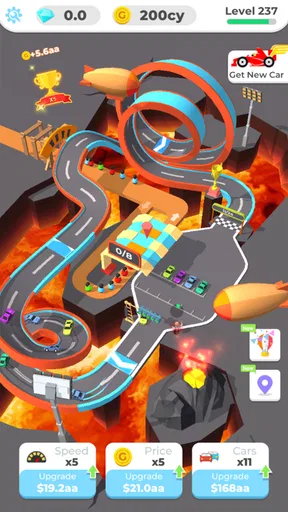
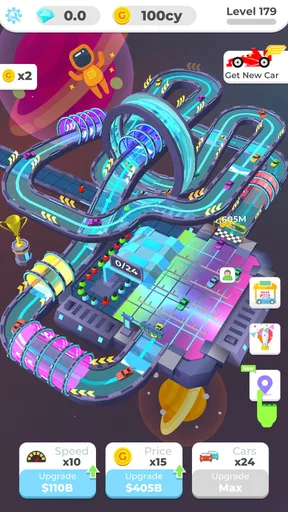



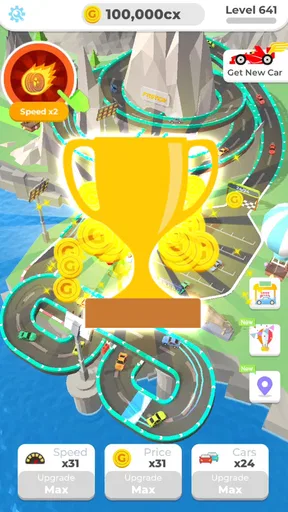
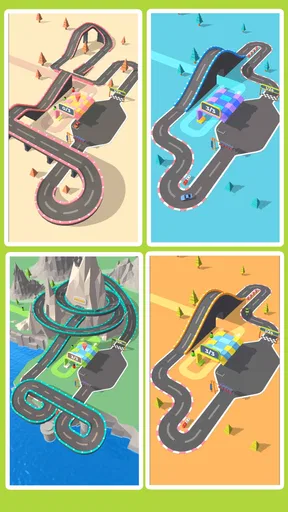

Our Review of Idle Racing Tycoon-Car Games
 Analysis by Appyee
I picked up Idle Racing Tycoon-Car Games expecting a light racing-themed time filler, but its real appeal is not steering a car around a track. It is the gradual work of building and improving a racing circuit, then deciding where the next upgrade will make the whole operation run better. That makes it an adventure game with a management rhythm rather than a conventional driving game.
After spending time with it, I found the experience easiest to understand in a shared household setting. One person can make a few improvements, put the phone down, and let someone else look at the circuit later. It is not a game that depends on everyone being present at the same moment. That relaxed pace is also its main limitation: anyone looking for direct racing, quick reflex challenges, or deep competition may find the tycoon structure too passive.
What it feels like to build a circuit together
The central fantasy is simple: start with a modest racing operation and gradually turn it into something more capable. Instead of treating each session as a separate race, the game encourages me to think about the circuit as an ongoing project. I check what is producing progress, choose an improvement, and return later to see whether the decision has made the next stage easier.
That loop works particularly well on a household device that is passed between people. Imagine using it during a quiet evening: one person improves the circuit before dinner, another checks the results afterward, and a child can watch the visible progress without needing to understand every management choice. The game creates a shared object to discuss, even though the actual play remains on one device.
There is a useful distinction here between shared interest and shared control. The game can be enjoyable when family members talk about what should be upgraded next, but the person holding the device still makes the decision. I would agree on a simple rule before handing it around, such as taking turns with upgrades or letting the person who started the save make the final choice. That avoids the small arguments that can happen when a limited resource is spent differently from what someone expected.
Because the game is free to start, it is easy to try without making the household commit to a purchase. The age rating is Everyone, which makes the tone suitable for a broad audience. Still, an age label is not a substitute for supervision around spending. The game includes in-app purchases ranging from $3.99 to $18.99 per item, so I would treat payment decisions as an adult responsibility on any shared device.
Starting without turning the first session into a chore
The opening is best approached as an explanation of the game’s basic rhythm, not as a test of strategic expertise. I would let a new player make the early choices rather than immediately taking over. The first few improvements are valuable because they show how the circuit develops, and that discovery is more satisfying when the player understands the connection between an action and its result.
For a shared device, I recommend deciding who is responsible for the save before beginning. That sounds minor, but it changes the experience. If several people assume they can freely alter the same progress, the game becomes a source of confusion. If the group treats it as a communal project with one agreed decision-maker, the slower pace becomes an advantage rather than a problem.
Another practical boundary is session length. Idle games can invite repeated checking because progress feels almost complete and the next improvement is always nearby. I found it healthier to use the game as a short check-in rather than an activity that occupies every spare moment. A few minutes can be enough to review the circuit, make a considered change, and leave it alone.
This is also where the game differs from ordinary racing alternatives. A traditional racing game gives immediate feedback through movement, lap times, and direct control. Here, the reward is more gradual. The player gets satisfaction from seeing a system become stronger, not from mastering a corner or overtaking an opponent. If the person sharing the device wants action, this may not hold attention for long. If they enjoy watching a small project grow, the format is much more appropriate.
How I would divide decisions on a household device
The most useful household arrangement is to separate observation from spending. Anyone can look at the circuit and suggest an improvement, but the agreed player handles decisions that affect progress. This keeps younger players involved without making them responsible for choices they may not yet understand.
I would also avoid treating every return to the game as a reason to upgrade immediately. A better routine is to ask three questions: what is currently slowing progress, which improvement addresses that issue, and will the change still be useful after the next few sessions? This simple pause prevents random tapping and gives the management side more meaning.
For children, the game can become a gentle conversation about priorities. You can ask whether it is better to improve something that helps right away or save for a larger change. I would not present this as a formal lesson, because that can make a casual game feel like homework. The value comes from discussing the choice naturally while the circuit is visible on screen.
For adults sharing the game with one another, the same approach prevents a different problem: competing play styles. One person may prefer steady improvements, while another may be comfortable waiting for a bigger payoff. Neither approach needs to be declared correct. Agreeing on the goal—quick visible progress, long-term efficiency, or simply experimenting—makes cooperation easier.
Progression is the reason to return
The strongest part of the game is the sense that each visit contributes to a larger build. I like that the racing theme gives the management decisions a clear setting. I am not upgrading an abstract spreadsheet; I am trying to make a circuit more successful. That context makes small changes feel more connected than they would in a generic idle title.
At the same time, the idle structure means the player must accept waiting and repetition. Some sessions involve more checking than active play. That is not a flaw in the narrow sense—the game is designed around an ongoing operation—but it does mean the experience can feel slow if I want constant novelty. The best use case is a short break, a commute with time to spare, or a relaxed evening where gradual progress is welcome.
A useful habit is to make one meaningful change at a time when possible. If several upgrades are made together, it becomes harder to tell which decision helped. Testing a single improvement gives the management layer more clarity and makes the next choice easier. This is a small but important difference between simply collecting progress and actually learning how the circuit behaves.
I also found that the game works better when I resist the urge to measure success only by how fast the next reward arrives. Idle games can make every delay feel like a problem. In this one, the broader satisfaction comes from returning to a more developed circuit. If the player needs constant action to stay engaged, a conventional arcade racer will probably provide a better experience.
Where the free model changes the household experience
Being free makes the first decision easy: install it, try the loop, and decide whether the pace suits you. The purchase range means the more difficult question comes later. A player who becomes invested in the circuit may feel tempted to spend in order to move forward more comfortably. That is exactly why I would set a household rule before anyone begins.
On a shared phone or tablet, I would keep purchases out of casual decision-making. An adult should handle any payment, and children should understand that progress in a free game is not a reason to ask for an immediate purchase. The game can remain enjoyable without turning every improvement into a financial discussion, but that requires a clear boundary from the people sharing the device.
I would also explain that a purchase is not the same as becoming better at the game. Spending may change the pace or convenience of progress, but it does not replace the need to decide what the circuit needs. That distinction matters for younger players, who may otherwise assume that paying is the normal solution whenever progress slows.
The free entry point is therefore both a strength and a responsibility. It lowers the barrier to trying the game, while the optional purchase range makes shared-device rules worthwhile. For a personal device used by an adult, this is easy to manage. For a family device used by several people, I would make the spending boundary part of the setup conversation.
Age, trust, and the limits of shared play
The Everyone rating matches the game’s approachable racing theme and management focus. I would feel comfortable showing it to a child, especially when playing together. The more important question is not whether the game is suitable to view, but whether the player understands that the circuit belongs to an agreed shared save and that upgrades should not be made without permission.
That trust issue is easy to overlook because the game looks harmless. A child may tap through choices with enthusiasm, while an adult may care more about preserving a particular plan. Neither person is necessarily behaving badly; they are simply treating the same progress differently. A short explanation before sharing the device solves more than a complicated rule introduced after something goes wrong.
I would not use the game as a completely unsupervised shared activity for very young players if spending access is available on the device. The age rating describes the content, not the household’s payment setup. Keeping the game free to play and making upgrade decisions part of a turn-based routine gives everyone a clearer role.
For older children and teenagers, the game can be a good low-pressure way to practice patience and prioritization. It is less suitable if they are likely to become frustrated by waiting or to compare it with fast multiplayer racing. The right match depends more on temperament than on age alone.
How it compares with other racing and adventure games
Compared with a standard racing game, this title removes the most immediate part of the genre: I am not primarily controlling a car through a course. The focus is the circuit as a business-like project. That makes it less exciting for players who want speed, but more accessible to people who enjoy planning and gradual improvement.
Compared with a typical adventure game, the movement through a story or world is not the main attraction. The adventure comes from developing the racing operation over time. Players who need characters, exploration, or a strong narrative may prefer a different type of adventure game. Here, the motivation is practical: improve the setup, observe the results, and decide what comes next.
It also differs from more competitive management games because its idle approach makes it easier to play in short bursts. I do not need to reserve a long uninterrupted session to see value from it. That is a real advantage in a household where the device is frequently handed from one person to another. The trade-off is that the game may feel less demanding and less dramatic than a deeper simulator.
My advice is straightforward. Choose this game if the phrase “build a racing circuit” sounds more appealing than “win a race right now.” Skip it if you want precise controls, head-to-head competition, or a campaign driven by story events. The racing theme is inviting, but the underlying activity is management.
Technical fit and what to expect from the current build
The game was released on January 14, 2020, and the current version is 2.1.6. It requires Android 6.0 or later, so anyone using an older Android device should check compatibility before planning to share it. On a suitable phone, the main consideration is not demanding racing controls but whether the device is comfortable for repeated short check-ins.
Solid Games has kept the concept focused around its circuit-building loop. That focus is helpful for new players because the purpose is easy to understand, but it also means there is not much reason to install it if the idle format itself is unappealing. Version information is worth checking when troubleshooting, particularly on a household device that may not update apps automatically.
I would also remember that shared use can make progress feel inconsistent if several people play without communicating. What looks like a technical problem may simply be an unexpected upgrade or a different interpretation of the next goal. Keeping one person in charge of major choices is the simplest way to tell whether the game is behaving as expected.
Who will enjoy it, and who should pass
I think it is a good fit for players who like incremental progress, light strategy, and racing themes without needing to drive every lap. It suits people who enjoy checking a project, making a decision, and returning later. It also works well for a parent and child who want a small shared activity that can be discussed without requiring intense concentration.
It is less convincing for players who dislike idle mechanics. If waiting feels like the game is withholding the fun, the circuit-building structure will probably become repetitive. The same is true for anyone seeking a rich social experience. Sharing a device can create conversation, but that is different from built-in multiplayer or direct competition.
Adults who want a quiet personal game may appreciate the low-pressure pace, especially when they have only a few spare minutes. Families should approach it with clearer boundaries because the free model includes paid items. The content is suitable for Everyone, but spending and shared-save decisions still deserve adult attention.
My household verdict
After using it as both a personal game and a possible shared-device activity, I see Idle Racing Tycoon-Car Games as a calm, accessible adventure-management game with a clear audience. Its best quality is the way it turns a racing theme into an ongoing project. I can make a small improvement, leave the game, and come back later with a reason to check the circuit again.
The household experience is strongest when expectations are set early. Decide who controls the save, agree that major upgrades are discussed, and keep purchases in adult hands. Those boundaries do not take away from the fun; they protect the cooperative part of the experience and prevent a casual game from creating unnecessary arguments.
The rating of 4.6 from around seventy-five thousand ratings and more than five million installs suggests that the format has found a substantial audience. I would not treat that popularity as proof that everyone will enjoy it, because idle games are naturally divisive. For me, the important question is whether the player wants to manage progress rather than directly race.
My final recommendation is to try it if you want a free racing-themed game that fits short sessions and can become a small shared project at home. Choose another option if you need fast controls, deep simulation, or competitive multiplayer. For the right player, the simple loop is relaxing and surprisingly easy to coordinate; for the wrong player, the waiting will be the whole problem.
Best suited to patient builders who enjoy improving a circuit one decision at a time. That is the honest summary I would give a friend: approachable, easy to share with sensible boundaries, and worth trying for its management rhythm—but not a replacement for an actual racing game.
Verdict
Strengths of Idle Racing Tycoon-Car Games
- Simple idle mechanics make progress easy to understand.
- Offline earnings let you advance even when you are not playing.
- Many cars and upgrades provide clear long-term goals.
- Short races suit quick gaming sessions.
- Bright visuals and simple controls work well on mobile devices.
Limitations of Idle Racing Tycoon-Car Games
- Progress can slow considerably without frequent upgrades.
- Ads may interrupt play or be needed for extra rewards.
- Some upgrades require substantial in-game currency.
- Gameplay can feel repetitive after extended sessions.
- Limited racing control may disappoint players seeking a true simulator.
Similar Picks in This Category
View All
Roblox
Roblox Corporation4.2

Pokémon GO
Niantic, Inc.3.5

Ninja warrior: legend of adven
TOH Games4.6

Ninja Arashi
Black Panther4.6

Eyes - The Horror Game
Fearless Games sp. j.4.5

Critical Action:Gun Strike Ops
FPS Shooter & Action Game4.3
Frequently Asked Questions
What is Idle Racing Tycoon-Car Games?
Idle Racing Tycoon-Car Games is a casual management and racing game where you build and expand your own automotive empire. Instead of controlling every race directly, you manage drivers, upgrade vehicles, improve tracks, and earn rewards over time. Its idle mechanics allow progress even when you are not actively playing, making it suitable for short sessions or relaxed long-term gameplay.
How does the idle progression system work?
The game continues generating income and racing rewards while you are away, provided your facilities and drivers are active. When you return, you can collect accumulated earnings and invest them in faster cars, improved race tracks, staff, and other business upgrades. Progress is generally steady, although some later improvements may require patience, repeated play, or optional rewarded advertisements.
Can I play Idle Racing Tycoon-Car Games without an internet connection?
Some basic features may remain available offline, particularly vehicle management and previously unlocked progression, but the exact experience can depend on the game version and device. Internet access is usually required for advertisements, cloud synchronization, special events, updates, and certain online rewards. It is best to launch the game online periodically so progress and purchases can synchronize correctly.
Does the game include advertisements or in-app purchases?
Yes, Idle Racing Tycoon-Car Games may include optional advertisements and in-app purchases. Watching a rewarded video can often provide bonuses such as extra cash, temporary boosts, or faster progress, while purchases may reduce waiting times or unlock premium resources. You can usually play without spending money, but progression may feel slower if you avoid both advertisements and paid options.
Is Idle Racing Tycoon-Car Games suitable for children and casual players?
The game is generally easy to understand because its main systems rely on tapping, upgrading, collecting income, and making simple management decisions. It can be enjoyable for casual players who like cars and incremental progress rather than realistic driving simulation. Parents should still review the store age rating, advertising content, and in-app purchase settings before allowing children to play.
Play our best games!


